Monarch Butterfly
Danaus plexippus
The orange migrant that finds its way
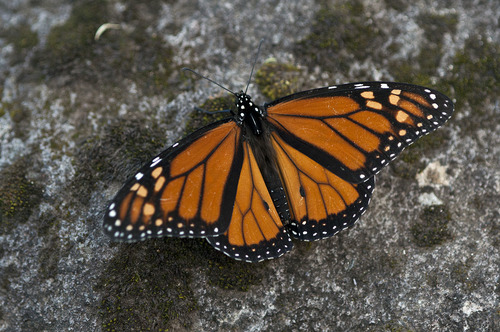
Famous for long-distance migration, the monarch wears orange and black to warn predators of toxins from milkweed. Eastern adults emerging in late summer and early fall fly south for the first time, possibly over 3000 km, to winter in the mountains of central Mexico.
Key figures
- Wingspan
- About 7–10 cm; a large butterfly
- Weight
- Adults weigh about 0.5 g on average, less than a paperclip
- Lifespan
- Most summer breeding adults live about 2–5 weeks; overwintering adults in reproductive diapause can live 6–9 months
- Habitat
- Fields, roadsides, open areas and even urban gardens with milkweed and flowers; most eastern monarchs overwinter in fir forests in the mountains of central Mexico, western monarchs mainly on the California coast
- Diet
- Larvae can eat only milkweed; adults drink nectar from many kinds of flowers
- Navigation
- A time-compensated sun compass: the eyes sense the position of the sun and antennal clocks correct for time of day; lab tests also found a light-dependent magnetic inclination compass
Life cycle
Egg → Larva (five instars) → Pupa (hanging chrysalis) → Adult
Ecological role
Adults are pollinators that need a wide variety of flowers for nectar during breeding, migration and overwintering. Caterpillars eat only milkweed and store its cardenolide toxins, a chemical defense against birds and other vertebrate predators that may not deter invertebrate predators.
Did you know
A 2014 flight-simulator study found fall migrants also have a light-dependent magnetic compass, likely in the antennae, that may help when daylight cues are missing.
Range
Native to the Americas; the eastern migratory population travels from Canada through the United States to overwinter in the mountains of central Mexico, while the western population mainly overwinters along the California coast; it has spread to places including Australia, New Zealand and parts of the Iberian Peninsula
Status
The migratory subspecies was listed as Endangered by the IUCN in 2022, then reclassified as Vulnerable after a 2023 petition ruling; its population trend is decreasing. The species as a whole is assessed as Least Concern
Anatomy
- Forewing — Orange with black veins: a warning pattern telling predators that eating it can be toxic
- Hindwing — Males have a small black spot on a vein of each hindwing that females lack, an easy way to tell the sexes apart
- Feeding tube (proboscis) — A straw-like mouthpart for sipping nectar and water, curled up when not in use
- Antennae — Club-shaped antennae with swollen tips help sense scent and regulate the internal clock used for navigation
- Compound eyes — Wide-field compound eyes; during migration they sense the position of the sun for the sun compass
- Abdomen — Males have a pair of claspers at the tip of the abdomen to grasp the female during mating
Open the interactive 3D specimen